Cats can be considered senior from seven years of age, so senior cat care in Lugarno can begin before signs of ageing are obvious. Ageing is a normal part of life, but a noticeable change in your cat’s behaviour or health deserves attention. Regular health checks and a comfortable home help you keep track of how they’re doing.
It’s natural to feel concerned if your familiar companion starts eating differently, drinking more or losing weight. Don’t dismiss these changes as simply old age. They’re a good reason to seek veterinary advice.
This guide explains how to support your older cat’s comfort, recognise possible signs of ageing or illness, and respond to changes in weight, appetite and thirst. You’ll also find practical ways to make everyday essentials, such as resting places, food, water and litter, easier to reach.
• From seven years of age, cats may be considered senior, making regular health monitoring an important part of their care.
• Keep food, water, resting places and litter easy to reach, and adjust the home to suit your cat’s changing mobility or senses.
• Notice changes in behaviour, weight, appetite or thirst; a gradual shift can still be a reason to arrange a veterinary visit.
• Learn what routine health checks can help monitor as your cat ages, and which changes deserve prompt attention.
Senior cat care in Lugarno combines regular health monitoring with simple adjustments at home. Track changes in your cat’s water intake, behaviour and movement, then discuss them during veterinary checks.
Changes in thirst, appetite or movement can signal a change in health. Kidney disease and diabetes are common concerns in older cats; arthritis and thyroid disease can also affect daily comfort. Possible clues include drinking more, losing weight, eating differently, moving stiffly or seeming restless. These signs can overlap, so they don’t identify a condition on their own.
Keep fresh water easy to reach, including on the floors your cat uses. Notice whether the bowl empties faster than usual, and record changes in food intake, litter habits or behaviour. A clear record helps you explain what changed and when.
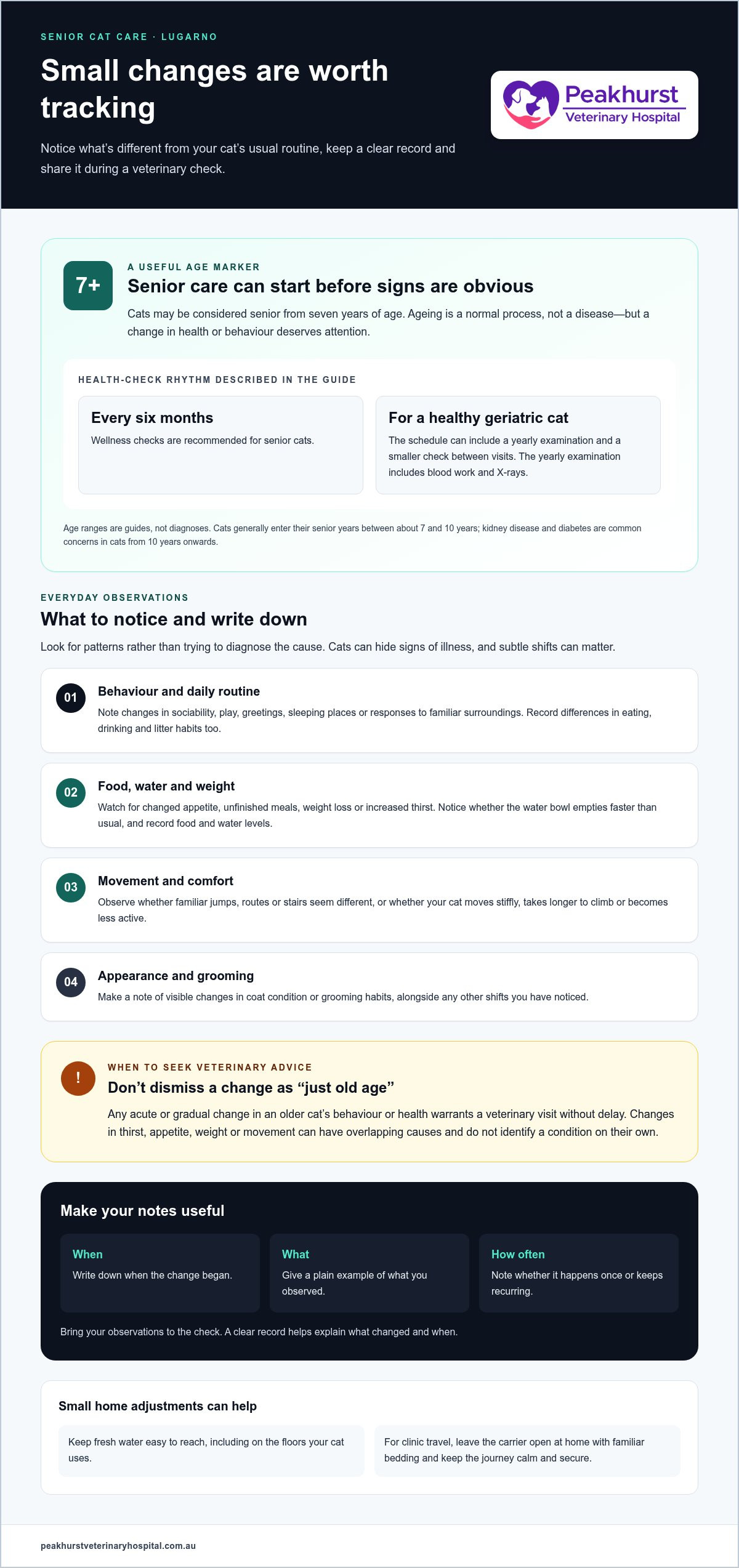
Cats are considered senior from seven years of age. Six-monthly wellness checks are recommended for senior cats. For a healthy geriatric cat, the schedule can include a yearly examination and a smaller check between visits. The yearly geriatric examination includes blood work and X-rays.
Regular examinations let a veterinarian assess changes over time, rather than relying on a single observation at home. An annual health check is a good opportunity to discuss thirst, appetite, weight, movement and dental comfort. Mention gradual changes too, such as taking longer to climb or leaving food unfinished.
Mobile veterinary care involves a veterinarian visiting the cat at home, while clinic-based care means travelling to an examination room. For senior cat care around Lugarno, consider which setting best suits your cat’s mobility, stress and examination needs. At Peakhurst Veterinary Clinic and Small Animal Hospital, veterinary care is provided at the clinic, where the team can assess your cat in person.
To make clinic travel gentler, leave the carrier open at home with familiar bedding, then keep the journey calm and secure. If your cat is unsettled by handling, mention what you’ve noticed when arranging an appointment. A clear account of changes helps the team plan a considerate examination.
Ageing is a normal process, not a disease. Knowing the life-stage ranges can help you notice changes without assuming every difference is simply age.
Cats generally enter their senior years between about 7 and 10 years of age, and a 7-year-old cat may be considered senior. These ranges are guides, not diagnoses, so your cat’s age is best understood alongside changes in health and routine.
Some descriptions place cats in an older life stage at 12 to 14 years; earlier conventions used eight years. At 11, cats have been compared with people reaching retirement age, while a 14-year-old cat has been compared with a person in their seventies. These comparisons offer context, but don’t predict an individual cat’s health.
For example, note whether your cat still jumps onto a favourite chair or takes a different route. Specific observations help you distinguish a familiar routine from a new change.
Ageing can bring gradual changes, but it isn’t itself a medical condition. Kidney disease and diabetes are common ailments in cats from 10 years onwards, making new changes worth noticing rather than automatically attributing to age.
Compare your cat’s usual habits with what you see now: a changed routine, reduced activity or a different response to familiar surroundings. Cats can hide signs of illness until it has advanced, so a subtle shift may matter even when your cat still seems settled.
Keep a simple record of when a change began and what you’ve observed. Note changes in daily routine alongside your cat’s age. Sharing these details at a veterinary examination can help assess whether the change reflects ageing or a health concern.
Cats often hide signs of illness, so small changes deserve attention. Notice what differs from your cat’s usual routine rather than waiting for a dramatic symptom. A quieter greeting, a missed meal or a change in favourite sleeping spots are useful observations to record.
Look for patterns in everyday activities. Does your cat still jump onto the same chair, finish meals at the usual pace or visit the litter box in their familiar way? One unusual moment may be hard to interpret, but repeated changes give you a clearer picture to share at a veterinary visit.
Keep a short written record with dates and examples. Note when a change began, how often it happens and whether anything else has shifted at home. For instance, record food and water bowl levels, interest in play, grooming habits and movement around stairs. These details describe the change without attempting to diagnose its cause.
note changes in sociability, play or usual sleeping places.
record differences in eating, drinking or litter box use.
observe whether familiar jumps or routes seem different.
note visible changes in coat condition or grooming.
Any acute or gradual change in an older cat’s behaviour or health warrants a veterinary visit without delay. That includes a sudden difference, as well as a slow shift that becomes clearer over several days. Bring your notes and describe changes plainly, including when they began. If you’re unsure what matters, the specific examples you’ve noticed can help guide the conversation.
Don’t rely on one normal-looking moment to rule out a concern. Cats may continue familiar activities while showing less obvious changes elsewhere. A simple record of routines and food or water bowl levels can make those quieter shifts easier to notice and explain.
A change in weight, appetite or drinking can be an early clue that your cat’s health has changed. Look at the pattern, not just one meal or visit to the water bowl. Note what your cat eats, how often the bowl needs refilling, and whether their body shape or energy seems different.
Increased thirst in an older cat is a reason to arrange a veterinary health check. Kidney disease is one possible concern. Early diagnosis can help manage it effectively, although it has no cure. An assessment is especially important if drinking more than usual is accompanied by a change in appetite or weight.
If your cat’s appetite decreases drastically, or you’re concerned about their lack of appetite, take them to a vet. Note when the change began and whether they still approach food, leave meals unfinished or seem less interested in familiar favourites. These details help explain what’s changed.
Offer a suitable senior diet and keep meals and fresh water easy to access. Senior diets may contain nutrients intended to support joint and kidney health. Mixing canned and dry food can also help an older cat take in water through canned food. A veterinarian can tailor food advice to your cat’s health and eating habits.
Keep an eye on your cat’s routine, too. Check the water bowl and food dish as part of daily care, and notice changes in appetite, thirst and weight together. These observations are more useful than trying to diagnose the cause at home.
If reduced appetite or increased thirst persists, arrange a veterinary assessment. Arrange an annual health check to discuss changes in eating, drinking and weight, and get guidance suited to your cat.
Peakhurst Veterinary Clinic and Small Animal Hospital offers annual health checks to help monitor your cat’s wellbeing as they age. Use these appointments to discuss changes in appetite, thirst, weight, behaviour or mobility, even when they’re gradual. Bring notes about what you’ve observed, such as unfinished meals or increased drinking, so the vet can consider the full picture.
Regular checks also give you a chance to discuss your cat’s ongoing care and ask about changes that concern you. If you’ve noticed a new symptom or a shift in familiar routines, arrange an appointment rather than assuming it’s simply ageing. A clear record can help you explain what changed and when.
For support with your cat’s health, contact Peakhurst Veterinary Clinic and Small Animal Hospital or visit the website.
Small, thoughtful changes to your cat’s routine can help you notice what supports their comfort. Keep a note of questions as they come up, so you can talk them through without needing to remember everything during an appointment. For senior cat care in Lugarno, steady observation and support from a veterinary team can help you make considered choices as your companion’s needs change.
Peakhurst Veterinary Clinic and Small Animal Hospital offers annual health checks, vaccinations and microchipping. These services can support your cat’s ongoing care at different life stages. If you’d like to discuss your cat’s health or arrange an appointment, contact Peakhurst Veterinary Clinic and Small Animal Hospital.
You don’t need to have every answer before taking the next step. Your observations and care are a valuable place to begin as you build a comfortable routine together.
Yes, cats aged seven years may be considered senior. This is a life-stage guide, not evidence that a cat is unwell. Changes in energy, play or comfort matter more than the label alone. Note whether your cat still jumps onto familiar furniture or takes longer to settle after activity, then discuss what you’ve noticed at a veterinary check.
A sudden or gradual change in an older cat’s health or behaviour warrants a veterinary visit without delay. Examples include a noticeable shift in appetite, drinking, movement or litter habits. Cats can hide illness, so don’t wait for several signs to appear together. Note what changed and when, then share those details when arranging an assessment.
Older cats may become less comfortable with familiar jumps or experience changes in vision or hearing. You might notice hesitation on stairs, difficulty finding a favourite spot in dim light, or a startled reaction when approached from behind. Keep furniture and essential items easy to locate, and approach gently from the front if your cat seems less aware of sounds.
Peakhurst Veterinary Clinic and Small Animal Hospital serves Lugarno and offers annual health checks for cats. Use these visits to discuss changes you’ve observed and ask about your cat’s care. Bring a short list of concerns, such as a recent change in routine, eating habits or mobility, to help make the appointment more useful.
Wellness checks every six months are recommended for senior cats. For healthy geriatric cats, the schedule includes a yearly examination and a smaller check between visits; the yearly examination includes blood work and X-rays. Putting appointments on a calendar can help you maintain a consistent routine and notice changes over time.
Arrange a veterinary assessment without delay, particularly if your cat’s appetite has dropped sharply or urination has changed. Note when the problem began, whether your cat is still eating or drinking, and what you’ve seen in the litter tray. Don’t try to diagnose the cause at home; clear observations help the veterinary team understand the change.