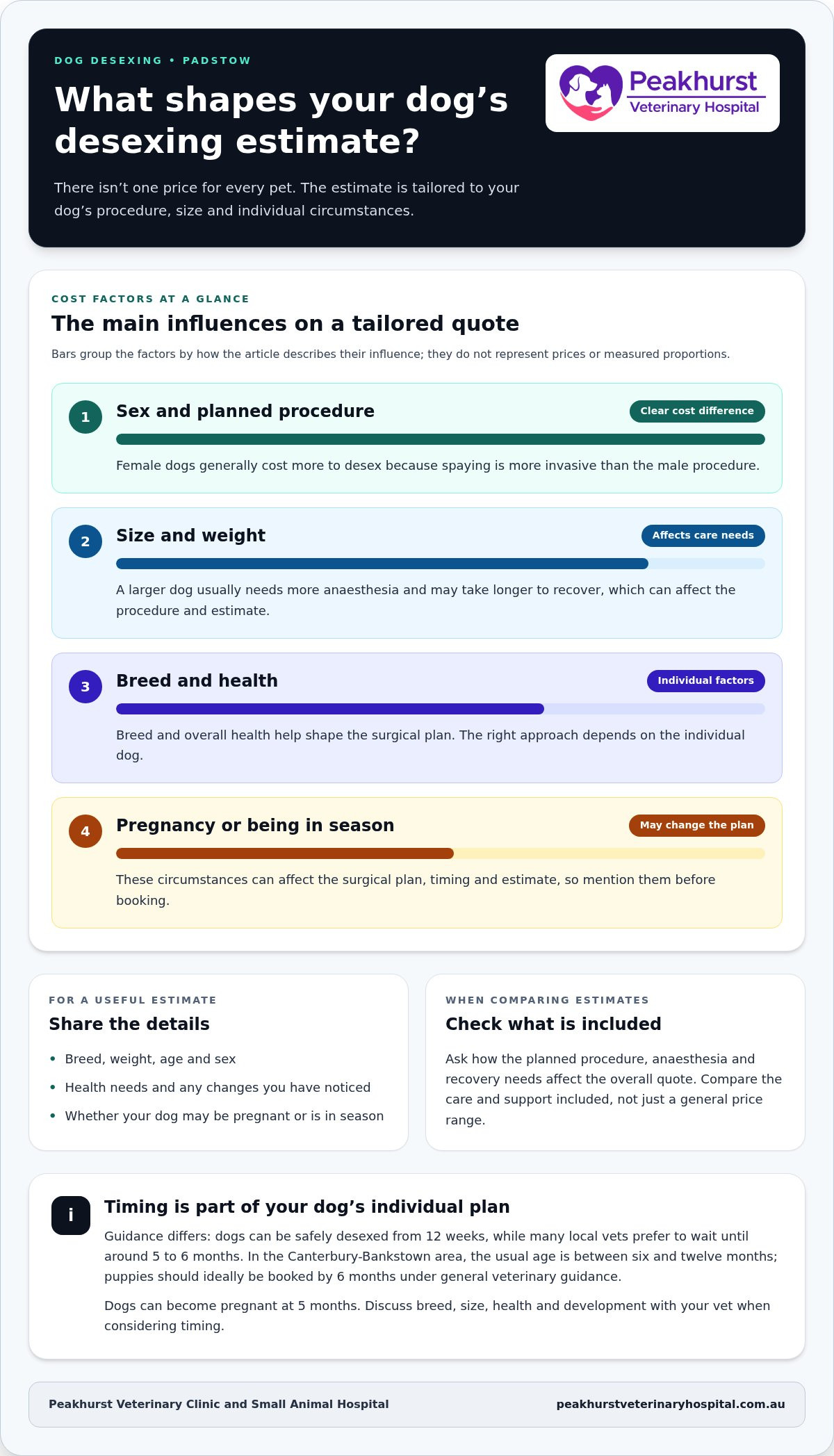
The dog desexing cost in Padstow depends on your dog’s sex, size, breed and individual needs, so there isn’t one price that suits every pet. Peakhurst Veterinary Clinic and Small Animal Hospital provides a tailored quote based on your dog’s circumstances. Female dogs generally cost more to desex because the surgery is more invasive, while size and health needs also help shape the surgical plan.
It’s also natural to wonder whether desexing surgery is safe. It’s generally safe, but, like any operation, it carries a risk of surgical complications or an anaesthetic reaction. Knowing what can affect the cost, what support may be available and what the surgery involves can make the decision feel more manageable.
This guide explains what can affect desexing fees in Padstow, how discounts and subsidies may help, and what to consider about safety, timing and recovery. You’ll have a clearer idea of the questions to discuss when planning your dog’s care.
• Your dog’s sex, size, breed and health needs can all influence the desexing fee, so focus on what shapes an estimate rather than a one-size-fits-all figure.
• Pregnancy or being in season can affect the procedure and its cost; learn why timing matters before planning surgery.
• Desexing is generally safe, but understanding the surgical and anaesthetic risks can help you feel prepared and support your dog’s recovery.
• Concession card holders may be eligible for discounted desexing through the National Desexing Network, and council registration discounts may also apply in some areas.
• Private clinics and lower-cost providers can differ in what’s included, so consider the care and support around surgery as well as the fee.
If your dog may be pregnant or is in season, mention this when discussing your dog desexing cost Padstow pet owners can expect. It can affect the surgical plan and estimate, so a routine quote may not reflect your dog’s circumstances. The quote is tailored to the case, taking into account factors such as pregnancy, being in season, size and health.
Pregnancy can be difficult to recognise at home, especially early on. If there’s a chance your dog has mated, share when it may have happened and any changes you’ve noticed, such as differences in appetite, energy or body shape. This helps the veterinary team at Peakhurst Veterinary Clinic and Small Animal Hospital assess her situation and discuss options before scheduling surgery.
Being in season is another detail to raise before booking. It can affect when surgery is planned and the care required. Your dog’s age and overall health also matter. While some councils or guidelines suggest dogs can be safely desexed from 12 weeks, many local vets prefer to wait until a dog is around 5 to 6 months old. These are different timing approaches, not a single rule for every animal.
For local dogs in the Canterbury-Bankstown area, the usual desexing age is between six to twelve months. Puppies should ideally be booked by 6 months under general veterinary guidance. Dogs can become pregnant at 5 months, so waiting without a plan can lead to an unwanted litter. The right timing depends on breed, size and health, as well as whether the dog is in season or pregnant.
explain when you first noticed signs of being in season or when mating may have occurred.
mention appetite, energy or other behaviours that seem different from your dog’s usual routine.
ask what the quoted amount covers for your dog’s circumstances, including any change to the surgical plan.
There’s no need to feel embarrassed or delay the conversation. These details help the veterinary team plan care for your dog’s individual needs. If you’re concerned about infection or notice an unexpected change in her health, include that when explaining what’s happening. Clear information supports a useful discussion about timing, surgery and the estimate.
Desexing is generally safe, but surgery carries risks, including complications or an anaesthetic reaction. Discussing pregnancy or being in season helps put the planned procedure and its risks in context. Share what you know and ask how your dog’s circumstances affect the plan and estimate, so you can make an informed decision about the next step.
In NSW, desexing costs vary with an animal’s species, weight and breed. For dogs, sex also matters: desexing a female generally costs more than desexing a male because spaying is more invasive. A larger dog usually needs more anaesthesia and may take longer to recover, which can affect the procedure and its estimate.
The estimate for your dog depends on their size, breed, sex and the care involved. Peakhurst Veterinary Hospital provides a tailored quote for your dog’s case. When comparing estimates, look at what each one covers rather than relying on a general price range.
What age can a dog be desexed in NSW, and when is it recommended? Dogs can be safely desexed from 12 weeks, though some vets prefer waiting until around 5 to 6 months. For Sydney dogs, desexing is usually recommended between six to twelve months, with puppies booked by 6 months under City of Sydney guidance.
Those ages provide context, not a universal timetable. Timing depends on your dog’s breed, size and health, alongside their stage of development. Dogs can become pregnant at 5 months, so owners should include pregnancy prevention in their timing decision. A veterinary discussion can weigh these factors against the needs of the individual animal.
Female and male procedures differ, which helps explain why estimates may not be alike. Spaying is more invasive, while a larger dog’s anaesthetic needs and recovery can affect the overall plan. If you’re comparing estimates for two dogs, differences in weight, breed and procedure may result in different quotes, even if the dogs are a similar age.
In dogs, desexing surgery removes reproductive organs to prevent unwanted pregnancies and litters. The procedure differs for male and female dogs, and the uterus is part of the female reproductive system. This distinction, along with your dog’s size and breed, matters when discussing the surgical plan and estimate.
give your dog’s breed, weight, age and sex when discussing an estimate.
understand how the planned procedure, anaesthesia and recovery needs affect the overall cost.
consider the guidance for Sydney dogs alongside your dog’s health, development and pregnancy risk.
These details help make a quote more relevant to your dog than a broad average. If you’re ready to discuss surgery for your pet, explore desexing care for pets as part of planning their veterinary care.
Dog desexing is surgery to remove reproductive organs and prevent unwanted pregnancies and litters. The operation differs for male and female dogs, so the planned procedure is central to understanding your dog’s care. A veterinarian considers your dog’s health and circumstances before surgery rather than treating every case alike.
A dog desexing quote in Padstow should explain the planned procedure and what the estimate covers. Ask how assessment, anaesthesia, medication and aftercare are addressed. Peakhurst Veterinary Hospital tailors the quote to your dog’s case and needs.
Before surgery, follow the veterinarian’s fasting instructions and keep your dog inside the night before. Arrange comfortable transport to and from the hospital. These steps help you prepare for your dog’s admission and journey home.
Desexing is generally safe, but every operation carries risks, including surgical complications or an anaesthetic reaction. A veterinarian can explain the risks relevant to your dog’s health and planned operation. Share any known health concerns and medicines your dog takes so these can inform the assessment and care plan.
Recovery needs calm, close attention. Dogs in Sydney usually take around 10 to 14 days to recover after desexing. Limit activity during this period to help prevent complications, and monitor the incision for swelling or discharge, which can be signs of infection. Follow the discharge advice for your dog rather than returning straight to normal exercise.
avoid letting your dog run or play energetically while recovering.
look for swelling or discharge and follow the veterinary team’s care advice.
plan a calm trip home after the operation.
Desexing is not the same as chemical castration. Chemical castration is different from surgical desexing, so ask your veterinarian what the treatment is intended to do. If your aim is to prevent unwanted litters, make sure you understand which procedure is being discussed and what it is intended to do.
Some owners hope desexing will change behaviours such as aggression or marking. These behaviours can have different causes, so surgery should not be seen as a guaranteed way to change behaviour. Describe what you’ve noticed, such as indoor marking, so the veterinarian can discuss the procedure’s purpose and your dog’s broader needs.
In the City of Sydney guidance, dogs desexed by 6 months qualify for a pet registration discount. Dogs not desexed by 6 months aren’t entitled to that discount and must pay the undesexed animal registration fee. This is City of Sydney guidance, so distinguish it from information about other NSW council areas.
A registration discount and a desexing subsidy are different kinds of support. The City of Sydney discount applies to pet registration, while the National Desexing Network offers discounted desexing to concession card holders. The Network’s discount relates to the procedure, not a council registration charge.
The distinction matters when planning your budget. A lower registration charge doesn’t necessarily reduce the surgical estimate, and a desexing discount doesn’t automatically change council registration fees. Treat them as separate costs when considering the overall expense. For example, an owner may qualify for a National Desexing Network discount and still need to meet local registration requirements.
Concession card holders are eligible for discounted desexing through the National Desexing Network. If you hold a concession card, this is a starting point for exploring support. The discount may help with surgery to prevent unwanted litters, but each dog’s procedure and care needs remain individual.
Local council guidance also highlights why timing can matter financially. Under the City of Sydney guidance, the registration discount is tied to desexing by 6 months. That timing may help owners consider both their dog’s surgery plans and registration costs. It’s useful to keep those decisions in view together, while remembering they’re separate charges.
use guidance for the council area where your dog is registered, rather than assuming City of Sydney rules apply throughout NSW.
concession card holders qualify for discounted desexing through the National Desexing Network.
distinguish the surgery estimate from pet registration and any applicable discount.
For Padstow owners, the key practical step is to establish which local council guidance applies to their address. City of Sydney’s 6-month registration discount is a specific example, not a statewide rule for every NSW council. Keeping council registration and surgery support separate makes it easier to understand which type of discount may apply to your circumstances.
Desexing prevents unwanted pregnancies, but timing should also take your dog’s health and development into account. A female dog’s reproductive health and individual needs can shape the surgical discussion. If you’re considering a subsidy, weigh the available support alongside the procedure and your dog’s wellbeing, rather than basing the decision on registration savings alone.
In the City of Sydney, dogs desexed by 6 months qualify for a pet registration discount; dogs not desexed by then must pay the undesexed animal registration fee. These are City of Sydney rules, so check the guidance for the council area where your dog is registered for the applicable rules and charges.
For Padstow dog owners, choosing where to arrange desexing involves more than comparing headline fees. Look at what each estimate includes, how the surgery is planned, and what support your dog receives before and after the procedure. A lower estimate may reflect a different service structure, so compare the details rather than assuming every quote covers the same care.
Desexing surgery removes reproductive organs to prevent unwanted pregnancies and litters. The planned operation varies between male and female dogs, and a female dog’s surgery is generally more invasive. Your dog’s weight and breed also affect the procedure, because larger dogs usually need more anaesthesia. These differences help explain why two estimates may not describe identical care.
The estimate depends on your dog’s case and is provided as a tailored quote. Factors include sex, size, breed, the planned procedure and health needs.
Compare estimates by checking the details each one provides. Look for a clear description of the planned operation and how anaesthesia, medication and follow-up care are addressed. Ask for clarification before deciding if anything is unclear. This helps you understand what the quoted service covers, rather than treating a higher or lower figure as a measure of quality on its own.
confirm the estimate describes the operation planned for your dog.
understand how your dog’s size and health inform the surgical plan.
find out what guidance is provided for home care and monitoring.
consider how your dog’s individual health may affect the plan.
Safety deserves as much attention as cost. Desexing is generally safe, but, like any surgery, it carries risks, including complications or an anaesthetic reaction. A useful comparison considers how your dog’s health is taken into account, not just the operation itself. Share known health concerns and medicines so the veterinary team can consider them.
Recovery is part of the overall experience, too. Dogs in Sydney usually take around 10 to 14 days to recover after desexing. Activity should be limited during this period, and owners should watch the incision for swelling or discharge, which can indicate infection. Clear aftercare instructions can help you know what to monitor at home.
Choose the option that gives you a clear understanding of the surgery, estimate and recovery support. To discuss surgical care for your dog, take the next step with a veterinary team.
Peakhurst Veterinary Hospital can help you plan desexing as part of your dog’s ongoing care. If you’re considering surgery or want to discuss timing, an annual health check is an opportunity to talk through your dog’s health and individual needs.
The clinic also provides vaccinations and microchipping to support your dog’s care through different life stages. Microchipping must be followed by registration with your local council, as required by law. Bringing your questions together can help you understand how desexing fits into your dog’s wider health plan.
For a calm next step, visit peakhurstveterinaryhospital.com.au to contact Peakhurst Veterinary Clinic and Small Animal Hospital.
Considering the dog desexing cost in Padstow is one part of planning care for a much-loved companion. Think about your dog’s health, life stage and the support you’d like around surgery. A clear conversation with Peakhurst Veterinary Hospital can help you turn those considerations into a manageable plan.
Peakhurst Veterinary Hospital offers annual health checks, vaccinations, microchipping and desexing. Microchipping must be followed by registration with your local council, as required by law. These services help put surgery in the context of your dog’s wider care. Bring your questions and share any details that may help guide the discussion.
For a supportive next step, contact Peakhurst Veterinary Clinic and Small Animal Hospital. You can take things at your own pace and make an informed choice for your dog.
Desexing is generally safe, but every operation carries risks, including surgical complications or an anaesthetic reaction. Share your dog’s health history and any medicines they take so these can inform the discussion. Ask what to watch for at home and who to contact if recovery does not seem to be progressing as expected. Clear instructions can help you feel prepared to care for your dog after surgery.
There isn’t one price that applies to every dog in Sydney. Peakhurst Veterinary Hospital provides a tailored quote based on your dog’s case, including sex, size, breed, health and the planned procedure. When reviewing an estimate, look at what it covers and whether it describes the surgery and care involved. That gives you a more useful comparison than a broad figure that may not match your dog.
Start by arranging a desexing appointment and sharing your dog’s age, breed, sex and any health concerns. If you’re unsure about timing, discuss your dog’s development and circumstances as part of the plan. Note your questions about the procedure, estimate and recovery so you can cover them in one conversation. Relevant health information helps the veterinary team understand your dog’s needs.
Before surgery, the veterinary team assesses your dog and provides instructions for the day. Follow the fasting directions given for your pet rather than changing their routine on your own. Keep your dog indoors the night before and plan comfortable transport to and from the clinic. If your dog becomes unwell or their circumstances change before the appointment, let the veterinary team know.
The dog desexing cost in Padstow depends on your dog’s individual circumstances, so Peakhurst Veterinary Hospital provides a tailored quote. Sex, size, breed, health and the planned procedure can all affect the estimate. If your dog is pregnant or in season, mention this when discussing surgery, as it may influence the plan. A tailored quote is more useful than a general Sydney estimate.
Yes. In NSW, desexing costs vary with an animal’s species, weight and breed. Female dogs generally cost more to desex because spaying is more invasive than the male procedure. A larger dog may need more anaesthesia, which can also affect the estimate. Share accurate details about your dog and any health needs when discussing the surgical plan.
Concession card holders are eligible for discounted desexing through the National Desexing Network. This is a support option for eligible owners considering the procedure. Keep any discount separate from council pet registration costs, as they are different expenses. City of Sydney guidance describes a registration discount for qualifying dogs, but it isn’t a Canterbury-Bankstown council rule. Check which council area applies to your dog’s registration.
Peakhurst Veterinary Hospital offers desexing and online booking. When arranging an appointment, have your dog’s breed, sex, age and relevant health details ready to share. Follow the fasting instructions provided, keep your dog indoors the night before and arrange comfortable transport. Planning ahead gives you a clear outline of the appointment day and helps prepare your home for your dog’s return.