A full bowl isn’t always a healthy one. Good dog nutrition advice from a vet in Sydney starts with food suited to your dog’s age, size and activity level, measured portions based on their ideal weight, and fresh water available at all times. Regular weight checks matter too, because extra weight can increase the risk of problems such as diabetes, heart disease and osteoarthritis.
It’s natural to show your dog love with treats or a little of what’s on your plate. But even well-intentioned feeding habits can make it harder to keep their diet balanced, especially when portions creep up or their needs change with age or health.
This guide explains how to assess pet food, understand essential nutrients, choose portions and routines, and recognise obesity-related health risks. You’ll also learn when veterinary guidance can help you make a calm, practical plan for your dog.
• Keep table scraps limited, and keep foods such as chocolate, onions and garlic away from your dog.
• Choose a complete food suited to your dog’s life stage, and introduce a new food gradually to help avoid digestive upset.
• Measure meals and keep a regular feeding routine; adjust portions as your dog’s needs and body condition change.
• Ask a vet to guide food choices for allergies, sensitive stomachs or health conditions, and before adding supplements.
• Learn how to spot changes in your dog’s body condition, so you can respond to weight gain before it affects their wellbeing.
Some human foods are safe for dogs, but table scraps shouldn’t replace balanced pet food. Leftovers can disrupt the nutrients your dog needs and may cause stomach upsets. Rich or fatty scraps can also trigger life-threatening inflammation of the pancreas. Keep treats occasional and include them in your dog’s daily food allowance.
Keep dangerous foods out of reach. Raisins, chocolate, onions and garlic are toxic to dogs. Cooked bones can splinter, while corn cobs may cause a blockage. Stone fruit and macadamias can also be toxic or cause gastric obstruction. If your dog eats something potentially harmful, contact a veterinarian promptly and explain what and how much they ate.
Choose pet food suited to your dog’s age, size and activity level. Puppies need food made for growth, with more energy, calcium and protein. Feeding puppy food to an adult dog may contribute to weight gain. For an adult dog, consider their activity and health needs rather than relying on packaging claims alone. Dog nutrition advice from a vet in Sydney can help match food to your dog’s individual needs.
Check the packaging for feeding guidance, ingredients and suitability for your pet’s life stage. In Australia, the Australian Veterinary Association says pet foods sold here, including pet meat and treats, should comply with Australian Standard AS5812-2023. This standard relates to pet food safety. Reading labels and choosing food made for your dog’s life stage are useful steps towards a safe, balanced diet.
Store dry pet food in a cool, dry place in a tightly closed container. Follow the packaging directions after opening, and keep food away from damp areas that could affect freshness. Serve it in a clean bowl, then wash the bowl between meals. Keep fresh, clean water available at all times, too.
Changing food suddenly can upset digestion. The clinic recommends changing dogs to new food gradually over four days. Watch for changes in appetite, stools or comfort during the transition. If your dog has a sensitive stomach or an existing health condition, ask a veterinarian which food and transition plan best suit them. Recipes and ingredients vary, so a gradual change helps your dog adjust.
Raw, homemade, grain-free and prescription diets aren’t right for every dog. Raw food needs to be balanced, safe and handled hygienically, while homemade and prescription diets need careful planning around your dog’s needs and any health condition. Discuss these choices with a veterinarian before changing your dog’s meals.
A balanced diet supplies protein, fats, carbohydrates, vitamins and minerals. Dogs need high-quality animal protein, which provides amino acids for enzymes and hormones and supports skin, coat, nails and immune function. Appropriate amounts of fat help build cells and absorb nutrients. Too much dietary fat, however, can contribute to weight-related problems such as diabetes, heart disease and osteoarthritis.
Calcium and phosphorus support strong bones, while carbohydrates provide energy for muscles and the brain. Vitamins and minerals also contribute to healthy bones and teeth. Water is essential, too: a pet’s body is approximately 70% water, so keep fresh, clean water available. Each nutrient has a role; adding extra ingredients or supplements without a clear need can disturb the balance.
Nutritional needs change with life stage. Puppies need food made for growth, with more energy, calcium and protein than adult food. Younger pets generally need more frequent meals because they usually burn more calories. Older pets may need diets restricted in fat and supplemented with fibre. Breed, age, weight and underlying health conditions also shape the right diet for each dog.
For a dog prone to weight gain, feeding once a day may be acceptable, but the total amount still matters. Avoid letting your dog eat as much as they want, since excess food can contribute to weight gain and stomach upset. A veterinarian can help tailor meal amounts and frequency to your dog’s ideal weight, activity and health.
Dogs with allergies or sensitive stomachs may benefit from a novel-protein, limited-ingredient or hydrolysed-protein diet, often with veterinary supervision. A prescription diet may also help manage a disease such as kidney disease or diabetes. These diets aren’t interchangeable, so the dog’s condition and response guide the choice.
Before adding fish oil, glucosamine or another supplement, speak with a veterinarian. Supplements can interact with medication or cause adverse effects when given in the wrong amounts. For dog nutrition advice from a vet in Sydney, nutrition advice for pets can help you consider your dog’s age, health and daily routine together.
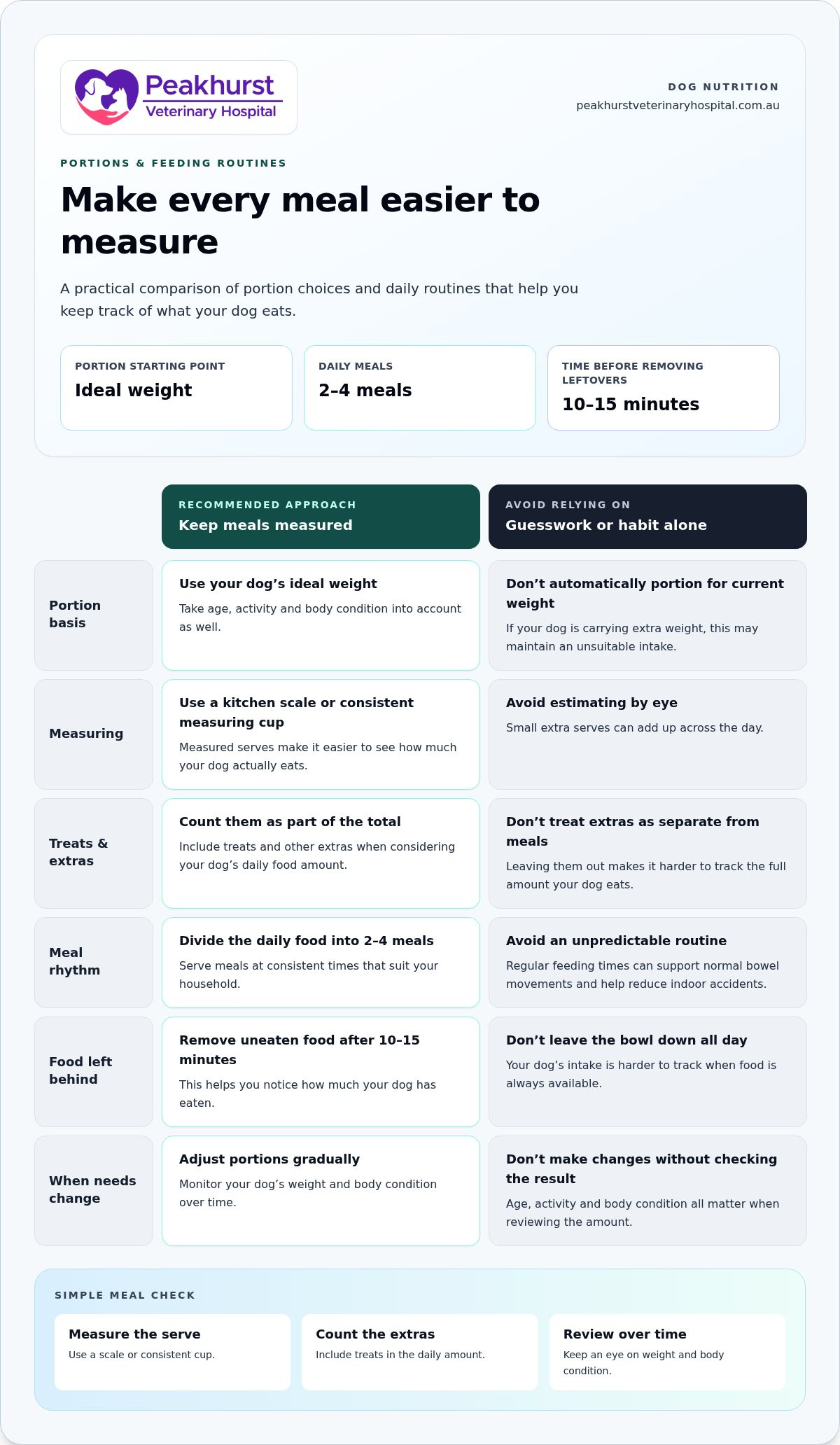
Measured meals make it easier to see how much your dog actually eats. Base portions on their ideal weight, not automatically their current weight. If your dog is carrying extra weight, using their current weight to set portions may maintain an unsuitable intake. Food labels provide a starting point, but your dog’s age, activity and body condition matter too. An active dog and a less active dog may need different amounts, even if they’re similar in size.
Measure each serve with a kitchen scale or a consistent measuring cup. Avoid estimating by eye, because small extra serves can add up across the day. Include treats and other extras when considering the total amount. If you change portions, do so gradually and monitor your dog’s weight and condition over time. Steady adjustments are easier to track and less likely to upset digestion.
Keep feeding times regular. A routine can support normal bowel movements and help reduce indoor accidents. Divide a dog’s daily food into 2 to 4 meals, then serve them at consistent times that suit your household. If food remains after 10-15 minutes, remove it rather than leaving the bowl down all day. This helps you notice changes in appetite and keeps portions easier to track.
Puppies need a routine that reflects their growth. Very young puppies up to 12 weeks old should have 3 meals a day. Gordon Vet's dog-feeding guide says feeding twice daily is usually appropriate after puppies reach 12 weeks of age. Follow the food’s life-stage directions and monitor how your puppy is growing. A veterinarian can help adjust the plan if your puppy’s weight, appetite or body condition changes.
To understand feeding costs, work out how much food your dog uses over the period shown on the packaging. Compare that amount with the pack size and feeding directions, then account for treats and any food left uneaten. The total depends on your dog’s portion, chosen food and how much is wasted. Don’t reduce a complete diet just to stretch a bag; portion changes should still meet your dog’s nutritional needs.
A personalised feeding plan brings together ideal weight, age, activity, body condition and meal routine. Record what you serve and note appetite or weight changes, so you can discuss patterns during a health check. Hard food or kibble may help maintain dental health and minimise tartar build-up, but the right routine depends on your dog’s overall needs. Considering these factors helps keep feeding practical and consistent.
See a vet if your dog’s appetite, weight, stools or energy changes, or if food causes repeated upsets. Get advice before changing diets to manage allergies, kidney disease or diabetes, and before adding vitamins, minerals or other supplements. A veterinarian can consider your dog’s health, medicines and current food together, rather than treating one symptom in isolation.
A nutrition assessment can be part of a routine physical examination. The World Small Animal Veterinary Association promotes nutritional assessment as the ‘5th Vital Sign’ for dogs and cats. The Australian Veterinary Association’s Standards of Care checklist includes a body condition score from 1-9. These checks help assess whether a dog’s weight and body condition fit their health needs.
Make the discussion specific. Bring the food packaging or a clear photo of the label, and note what your dog eats on a typical day. Include treats, chews, table food and supplements, along with any recent changes in appetite, stools or activity. A simple feeding record can reveal patterns that are easy to miss when meals are spread across the household.
Veterinary diet advice should reflect current scientific knowledge, and diets used to manage disease should be guided by a veterinarian. This matters for dogs with kidney disease, diabetes or suspected food allergies, where changing ingredients without a clear plan can make it harder to assess what helps. Ask how the recommended food supports the health goal, what changes to monitor, and when to review the plan.
In Sydney, general veterinary nutrition advice is available, but the phrase “board-certified” alone doesn’t establish a practitioner’s Australian qualifications. Ask about their recognised veterinary qualifications and whether your dog’s needs call for specialist input. For many everyday feeding questions, a veterinarian who knows your dog’s health history can help shape practical next steps.
Nutrition education also helps you make sense of labels and feeding routines. The World Small Animal Veterinary Association produced small animal nutrition guidelines in 2011, revised in 2013. Use a veterinary discussion to connect that kind of evidence with your dog’s age, condition and daily routine. A balanced diet needs suitable nutrients in appropriate amounts; adding extra vitamins or minerals without guidance can upset that balance or interact with medication.
Keep the conversation going as your dog’s needs change. A puppy growing into adulthood, an older dog becoming less active, or a dog preparing for surgery may need a fresh review of their diet. Bring new concerns and changes to your next veterinary appointment so the advice stays relevant to your dog, rather than relying on an old feeding plan.
Extra weight is more than a change in appearance. Obesity can contribute to diabetes, heart disease and osteoarthritis, affecting a dog’s comfort and health. It can also make everyday movement harder. Watch your dog’s body shape and weight over time, rather than relying on appetite or enthusiasm alone. Hill’s reports that a third of pet parents don’t recognise their pet’s weight issue, so an outside assessment can help identify gradual changes.
Noticeable weight gain, recurring digestive upsets, persistent itching or coat changes, and shifts in appetite or energy are signs to discuss with a veterinarian. These changes can have different causes, so they don’t identify a food allergy, intolerance or nutritional deficiency on their own. A body condition assessment helps put weight changes into context.
The Australian Veterinary Association’s Standards of Care checklist includes a body condition score from 1-9. A veterinarian can use this assessment alongside your dog’s health history, weight and usual diet. Bring a record of meals, treats and food ingredients, plus notes about any symptoms. This gives the discussion practical detail, rather than relying on memory.
Don’t start a weight-loss diet without an examination. Veterinary guidance can identify health factors that affect the plan and set an appropriate food amount. The clinic’s dog-dieting guidance sets an initial weight-loss target of 15% of a dog’s current weight. That target is a starting point for a supervised plan, not a reason to cut meals sharply at home.
Portion control matters because extra serves, treats and table scraps can quietly increase daily intake. Measure food consistently and include every treat when reviewing what your dog eats. A suitable diet still needs balanced nutrients, including high-quality animal protein. Avoid choosing food based only on claims about individual ingredients; the overall diet and your dog’s health needs matter.
Movement can support a weight plan. The clinic’s guidance recommends 30 minutes of exercise per day for adult dogs. For older dogs, it recommends dividing exercise into 10-minute sessions. Build towards at least two brisk walks of 10-15 minutes each day, increasing activity gradually to suit your dog’s current fitness.
Arrange an annual health check to review weight and body condition, and discuss nutrition advice if your dog is gaining weight or struggling with a diet plan. Discuss your dog’s weight and diet with a veterinary team, and bring your feeding notes to help shape the conversation.
Peakhurst Veterinary Clinic and Small Animal Hospital can review your dog’s weight and overall wellbeing during an annual health check. It’s a useful time to discuss changes in appetite, activity or body condition and bring notes about meals, treats and weight changes. This gives the veterinary team practical context for your questions.
Regular preventive care also includes vaccinations, microchipping and desexing. These needs differ from diet planning, but they are part of caring for your dog’s health over time. If weight gain or feeding concerns arise between checks, arrange a veterinary discussion rather than making sudden changes to meals.
Contact Peakhurst Veterinary Clinic and Small Animal Hospital or visit peakhurstveterinaryhospital.com.au to discuss your dog’s care.
Your dog’s needs can change over time, so make nutrition part of an ongoing conversation about their wellbeing. Keep a simple record of what they eat and any changes you notice. That gives you a helpful starting point for discussing their care and deciding what to adjust next.
If you’re looking for dog nutrition advice from a vet in Sydney, Peakhurst Veterinary Clinic and Small Animal Hospital offers nutrition advice and annual health checks. Vaccinations and microchipping are also available as part of your dog’s preventive care. Bringing your questions to a familiar health check can make the next steps feel clear and manageable.
There’s no need to have every answer before you seek guidance. A thoughtful conversation can help you care for your dog with confidence as their needs evolve. Contact Peakhurst Veterinary Clinic and Small Animal Hospital to discuss your dog’s care, and take the next step at a pace that feels right for you both.
Make sure your dog’s meals suit their needs and everyone at home follows the same feeding plan. For example, agree who gives treats and avoid several family members adding extras without tracking them. Keep the food packaging handy and note what your dog eats, including treats and chews. For dog nutrition advice from a vet in Sydney, bring those details to a nutrition discussion.
Some human foods can be shared, but don’t assume a food is safe just because people eat it. Avoid giving dogs seasoned leftovers, especially anything containing onion or garlic, and keep chocolate and raisins away from them. Table scraps can disrupt a balanced diet, so they shouldn’t replace your dog’s usual food. If your dog eats something potentially harmful, contact a veterinarian promptly and explain what they ate.
Pet-grade mince isn’t automatically a complete diet. According to the Australian Veterinary Association, pet foods sold in Australia, including pet meat and treats, should comply with AS5812-2023 for safety. That safety standard alone doesn’t tell you whether a mince supplies all the nutrients your dog needs as their main food. Check its intended use, and discuss the label with a veterinarian before relying on it as a sole diet.
Only add a supplement after discussing it with your pet’s veterinarian. Products containing fish oil, glucosamine, vitamins or minerals may not suit every dog, and supplements can interact with medication or cause adverse effects if given in the wrong amounts. Bring the packaging to your appointment, including its ingredients and directions. This helps your vet consider the product alongside your dog’s health and current diet.
Choose food labelled for your dog’s life stage, and check whether it’s intended as a complete meal or a complementary food. The word “premium” alone doesn’t show whether a product suits your dog. Consider their age, activity, body condition and health history, then compare those needs with the label’s feeding directions. If your dog has an ongoing health concern, discuss suitable food choices with a veterinarian.
Make the change gradually by mixing the new food with your dog’s current food, rather than switching meals abruptly. Keep track of what you serve and watch for changes in appetite or stools during the transition. Avoid introducing several new foods or treats at the same time, as that makes it harder to identify what caused a reaction. If problems persist, discuss the change with a veterinarian.
It can be a complete diet if the packaging identifies it as complete food suitable for your dog’s life stage. “Premium” is not, by itself, proof that a product meets all your dog’s nutritional needs. Check whether the label describes the food as complete or complementary, and follow its feeding directions. If you’re unsure how the food fits your dog’s health needs, ask your veterinarian to review it.
For many adult dogs, twice-daily meals can make a regular routine easier to manage, while once-a-day feeding can be acceptable for dogs prone to obesity. The total daily portion still matters, regardless of how it’s divided. Very young puppies up to 12 weeks need three meals daily; after that, twice-daily feeding is usually appropriate. Choose a routine that suits your dog’s age and health, and keep it consistent.