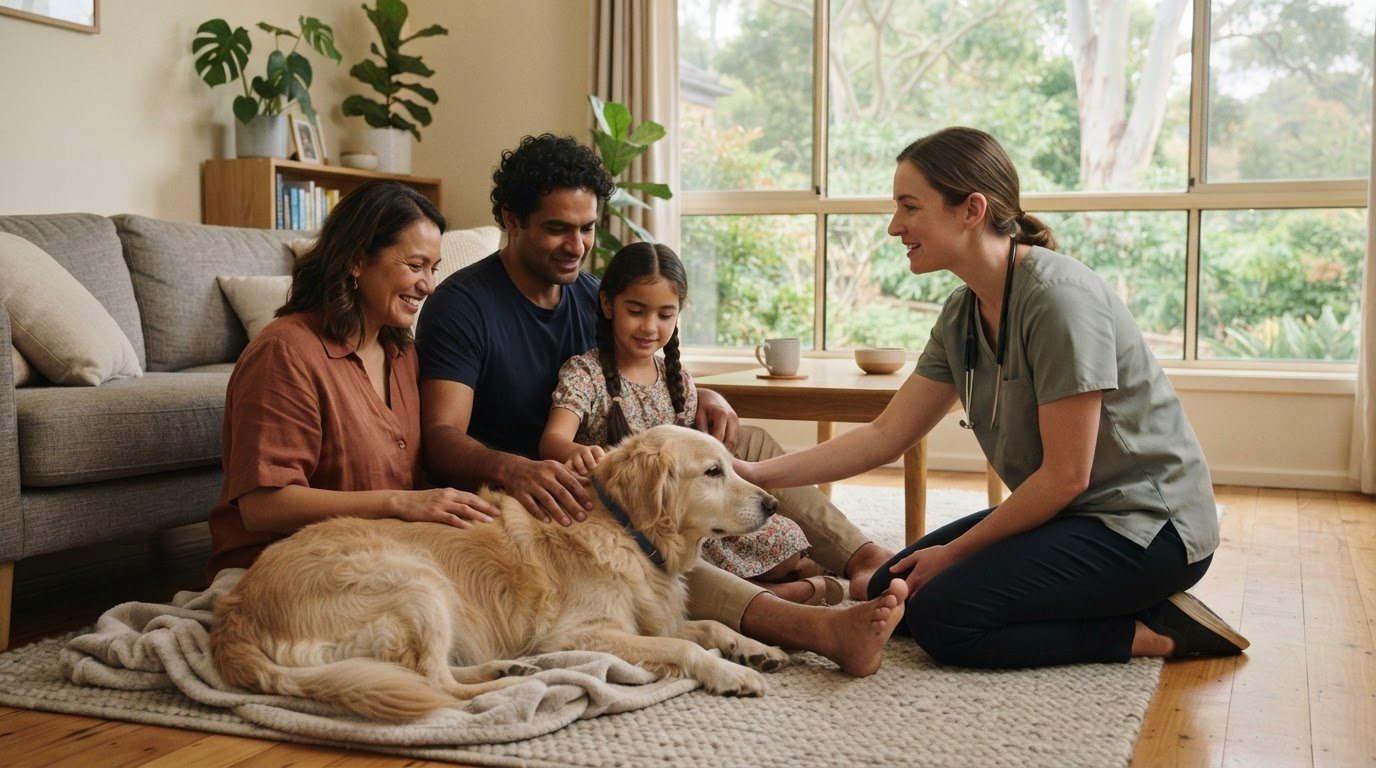
Saying goodbye at home can be deeply personal while still being guided by a veterinarian. With compassionate euthanasia for a dog in Sydney, a veterinarian visits your home, explains each step and typically gives your dog a sedative before administering the euthanasia solution. You can stay close and take time to say goodbye.
It’s natural to want your dog to feel safe and to wish you knew what to expect. Understanding how the visit and sedation work can make this difficult decision feel a little less daunting.
This guide explains what happens during an at-home appointment, how to consider your dog’s quality of life and when palliative care may help maintain comfort. It also covers aftercare and emotional support, so you can approach the next steps with greater clarity and care.
• At-home euthanasia lets your dog remain in familiar surroundings, with a veterinarian explaining the process and giving sedation before the final injection.
• Consider appetite, hydration, mobility, comfort and interest in everyday activities when reflecting on your dog’s quality of life.
• There’s no single right time to say goodbye; a vet can help you weigh your dog’s comfort and changing needs.
• Grief can affect the whole household, including other pets. Gentle routines and emotional support can help everyone adjust.
• Learn what to expect from a quality-of-life consultation and which aftercare choices may be available to your family.
Grief can begin before a goodbye and continue afterwards. A few practical steps can help you, your children and other pets adjust to the change.
A beloved dog is woven into ordinary routines, from morning walks to evenings beside the couch. One testimonial describes Tiger as part of Matt’s life for almost 14 years. That long companionship helps explain why anticipatory grief can feel intense while a dog is still at home. Naming what you’re feeling and sharing decisions with someone you trust can make the days ahead easier to approach.
Owners may feel sadness, uncertainty, relief that suffering has ended, or several emotions at once. Before the visit, choose someone to sit with you, help communicate your wishes and remember your questions. You might ask the veterinarian to explain sedation, the final steps and aftercare in plain language. Knowing what to expect can help you focus on your dog rather than the logistics.
For children, clear, gentle language is usually kinder than confusing euphemisms. Explain that the dog is very unwell and that the veterinarian will help them die peacefully, without suggesting they will wake later. Invite each child to choose a way to say goodbye, such as drawing a picture, placing a favourite toy nearby or spending quiet time together. Let them decide whether to be present; there’s no single way to respond to grief.
After your dog dies, a small ritual can give the family a moment to say goodbye. You could share a favourite memory, keep a collar or photograph, or make a paw-print keepsake. If you choose cremation, discuss whether you want ashes returned as part of your aftercare arrangements. Some home euthanasia services offer grief counselling or connect families with pet-loss support groups, which can provide a place to talk.
Other pets may respond to the absence of a companion, as animals who share a home can form strong bonds. A surviving dog might seek out familiar resting places or show changes in appetite, play or social behaviour. Keep daily routines steady, offer calm company and note any changes to discuss with your vet. This can help you support your remaining pet while managing your own loss.
Try these gentle steps during the first days:
• Keep familiar feeding and walking routines where possible.
• Share the news with family members and agree on a comforting remembrance.
• Reach out to a trusted person or grief support group if talking would help.
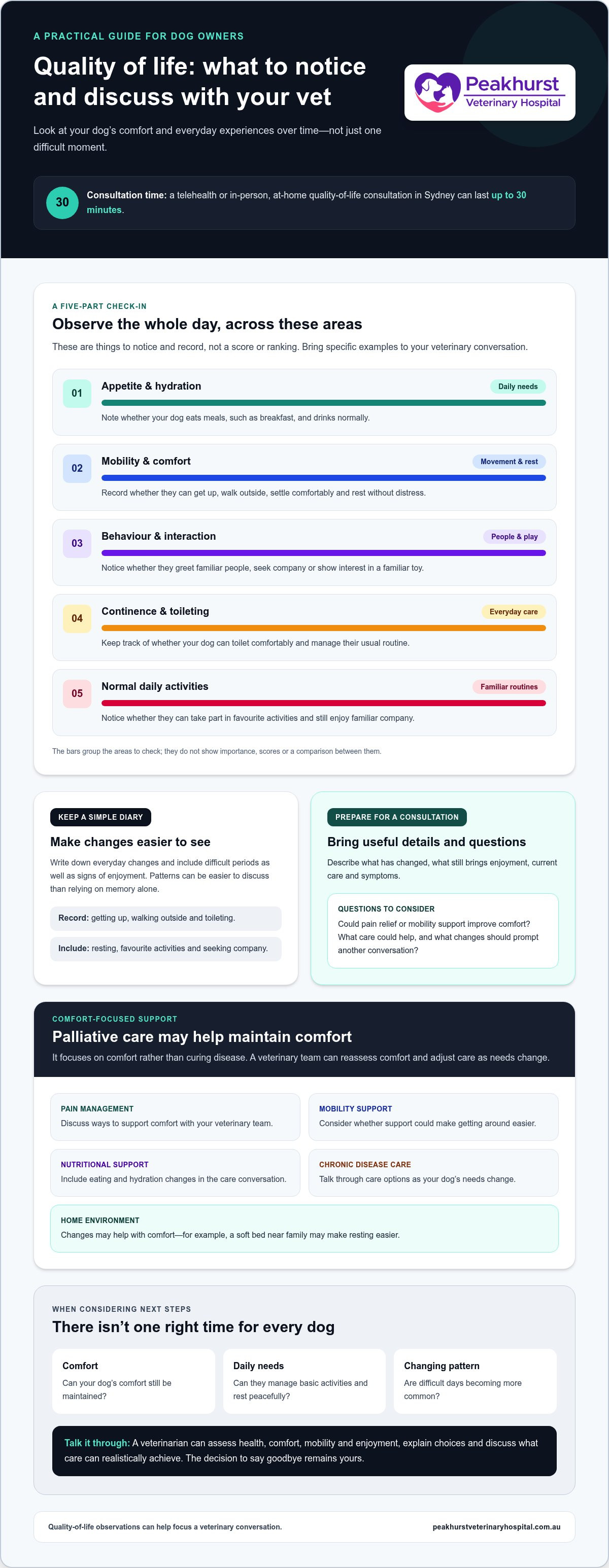
Consider your dog’s comfort and daily experiences, not just one difficult moment. A written record can help you notice changes and discuss them clearly during a veterinary consultation.
A quality-of-life consultation gives you space to describe what has changed and what still brings your dog enjoyment. In Sydney, a telehealth or in-person, at-home quality-of-life consultation can last up to 30 minutes. Beforehand, note your dog’s symptoms, current care and questions, such as whether pain relief or mobility support could improve comfort.
Bring specific examples rather than relying on a general impression. For instance, note whether your dog eats breakfast, drinks normally, settles comfortably or still greets familiar people. The University of Sydney veterinary team may discuss appetite and hydration, mobility and comfort, behaviour and interaction, continence and toileting, and normal daily activities. These details help give the conversation a practical focus.
At home, keep a simple diary of changes in your dog’s everyday routines. Record whether they can get up, walk outside, toilet comfortably, rest without distress and take part in favourite activities. Include difficult periods as well as signs of enjoyment, such as seeking company or showing interest in a familiar toy. This makes patterns easier to discuss than relying on memory alone.
Quality of life can involve several needs at once. Palliative care focuses on comfort rather than curing disease, and may include pain management, mobility and nutritional support, chronic disease care, or changes to the home environment. A soft bed near family, for example, may make resting easier. Veterinary teams can reassess comfort and adjust care as needs change.
There isn’t one right time that applies to every dog. Consider whether your dog’s comfort can still be maintained and whether they can manage basic daily activities, enjoy familiar company and rest peacefully. If difficult days are becoming more common, take your notes to the veterinarian and talk through what care can realistically achieve.
A veterinarian can assess health, comfort, mobility and enjoyment, then explain the choices clearly. They can guide you, but the decision to say goodbye remains yours. You might discuss a further comfort-care plan, what changes would prompt another conversation, or whether euthanasia is the kindest option if suffering can no longer be eased. For support with saying goodbye to a pet, a calm conversation can help you understand the next steps.
An at-home euthanasia visit gives you time to understand each step and stay beside your beloved pet. Knowing the sequence, from the veterinarian’s explanation to sedation and the final injection, can help you prepare.
The veterinarian typically begins by explaining what will happen and answering your questions. You can choose a familiar, quiet place where your dog can rest comfortably, such as a favourite bed. The veterinarian allows time for final goodbyes, so you can decide whether you’d like family nearby or prefer a quieter moment together.
Once you’re ready, the veterinarian gives a sedative before the euthanasia solution. Veterinary euthanasia commonly uses a concentrated anaesthetic injected into a vein. It makes the animal unconscious before the heart stops beating. The veterinarian explains the steps as they happen, giving you time to focus on your dog and ask for clarification.
Sedation helps your dog feel comfortable before the final injection. Your dog may become deeply relaxed or sleepy as the sedative takes effect. The timing and response can vary between animals, so the veterinarian can describe what they’re observing and what comes next during the visit.
Some dogs may show leg movements, muscle twitches or vocalisations during the procedure. These can be effects of the medication rather than signs of awareness or pain. Involuntary movements may also happen after the heart has stopped; they occur after the pet has passed and aren’t experienced as pain or discomfort. Ask the veterinarian to explain these possibilities beforehand if they concern you.
You may stay with your dog throughout euthanasia, or step away if that feels right for you. There’s no single correct choice. Some owners rest a hand on their dog, speak softly or offer a familiar blanket. Others ask a trusted family member to stay close while they take a brief pause.
Before the visit, consider who you’d like present and what might help you feel grounded. You could prepare a quiet room, keep a favourite toy nearby and agree on a simple way to tell the veterinarian you need a moment. If children are attending, explain what they may see in gentle, clear language. These small choices can help you honour your dog and share a peaceful goodbye on your own terms.
There’s no single right time to choose euthanasia for a dog. It may be appropriate when illness or declining quality of life means their comfort can no longer be maintained.
How can I tell when it may be time to euthanise my dog? Consider your dog’s comfort, mobility and enjoyment of daily activities, then discuss what you’ve observed with a veterinarian. They can guide you through the options, but the decision remains yours.
A daily care diary can help you recognise changes that stress may make difficult to judge. Note whether your dog eats, drinks, rests comfortably, moves around and responds to familiar people. Add an example each day, such as turning away from a favourite meal or settling peacefully beside a family member. These notes give you clear observations to discuss.
Use the diary to consider whether comfort care is helping. Palliative care focuses on comfort rather than curing disease; it can include pain management, mobility support, nutrition and changes to the home environment. For example, record whether a softer bed makes resting easier. The veterinary team can reassess your dog’s quality of life and adjust care as needs change.
• Write down changes in appetite, drinking, movement and toileting.
• Record moments your dog still enjoys, such as greeting a familiar friend.
• Note which comfort measures help and which difficulties continue.
Consider the overall pattern, not one difficult hour. If your dog struggles to move, rest or manage familiar daily activities, and their comfort remains hard to maintain, discuss what that means with the veterinarian. A terminal illness or poor quality of life can make euthanasia a humane option. Your dog’s condition and your circumstances both matter.
Ask the veterinarian to explain the likely course of your dog’s condition, the comfort care available and what signs would indicate that suffering can no longer be eased. This conversation can help you weigh treatment against your dog’s day-to-day experience. A compassionate decision is guided by your dog’s wellbeing, not pressure to choose a particular moment.
Planning practical details can reduce stress around a goodbye. Talk through who you’d like beside you, where your dog can feel settled and what aftercare you prefer. If you’re considering pet cremation, include it in the conversation so the arrangements are clear. A trusted friend can help you remember questions and support you through the decision.
In Sydney, dog euthanasia may be arranged through a veterinary clinic or an at-home service. The setting affects where your dog receives care, so consider their comfort, mobility and the support your household needs.
Clinic euthanasia takes place at a veterinary hospital, where your dog can be assessed and cared for on site. An at-home visit allows your dog to remain in familiar surroundings. In-home euthanasia may be available depending on veterinary availability and your pet’s condition. Urgent or after-hours options may also be discussed with a veterinary hospital when animal welfare is a concern.
Consider practical needs before deciding on a setting. A dog who finds car trips difficult, for example, may be more settled at home, while a clinic may suit families who want care in a dedicated veterinary environment. Your dog’s condition, comfort during travel and the support available to you all help shape the decision.
When arranging an appointment, explain what has changed and what your dog needs. Useful details include mobility, current comfort, whether travel is difficult, and whether you’re seeking a clinic appointment or a home visit. If timing is urgent, say so clearly. These details help the veterinary team understand the situation and discuss an appropriate next step.
Appointment timing can differ. Some home euthanasia appointments may be available outside standard clinic hours, though timing depends on the service and circumstances. If your dog’s condition has worsened, share the signs you’ve noticed, such as difficulty resting or moving. That information helps the veterinary team understand the urgency and discuss the available pathway.
Aftercare is another practical consideration. Veterinary teams can help with arrangements after euthanasia, including cremation options. Some home-visit services coordinate aftercare, such as transport to a crematorium and return of ashes. If you’re considering pet cremation, decide whether you’d like ashes returned and raise this as part of planning. It can be easier to discuss these choices before the appointment.
Costs vary with appointment timing, location and additional services such as aftercare. Discussing these factors can help you understand the arrangements and reduce uncertainty during an already emotional time. If you’re weighing a clinic visit against a home appointment, focus first on your dog’s comfort and the practical support your family needs.
For guidance about saying goodbye, contact our veterinary team to discuss your dog’s needs and the next step.
Sydney veterinary hospitals provide clinic euthanasia. A home visit may be an option through a veterinary service that provides at-home care.
Peakhurst Veterinary Clinic and Small Animal Hospital provides care for dogs, including annual health checks, vaccinations and microchipping. After a difficult decision, a routine appointment can help you discuss another pet’s health, changing needs and everyday wellbeing with the veterinary team.
Annual health checks are an opportunity to raise concerns you’ve noticed at home, while vaccinations and microchipping support other aspects of your dog’s care. The team also provides desexing for pets. These services are suited to routine care and guidance, rather than emergency hospital visits.
For a calm conversation about routine care for your pet, contact Peakhurst Veterinary Clinic and Small Animal Hospital.
The next step can be a conversation centred on what matters most to your family. If you’re considering compassionate euthanasia for your dog in Sydney, you don’t need to have every detail settled before seeking guidance. Start with the concern weighing most heavily, whether it’s your dog’s comfort, uncertainty about timing or how to prepare emotionally. Writing down your thoughts can make it easier to explain what you’re experiencing and what support would help.
As you work through this decision, give yourself room to pause, ask questions and involve someone you trust. There’s no need for the experience to look a particular way. Your bond with your dog is personal, and the care you offer can reflect that bond with gentleness and respect.
If you’d like to talk about saying goodbye or ongoing care for another pet, contact Peakhurst Veterinary Clinic and Small Animal Hospital. Taking one thoughtful step at a time is enough. You and your dog deserve kindness throughout this chapter.
Consider whether your dog’s comfort can still be maintained and whether they can enjoy familiar parts of daily life. Keep a short record of changes, such as refusing food, struggling to settle or no longer greeting family. Share those observations with a veterinarian and ask what comfort care could achieve. The decision is personal, but a clear picture of your dog’s days can help you weigh the choices.
The price depends on the case and is provided after a quote request. In Sydney, costs can vary with appointment timing, location and aftercare choices, such as cremation. Ask for the expected charges to be explained before arrangements are made, including any separate aftercare costs. This helps you understand what is included and avoid unclear details later.
Urgent or after-hours euthanasia may be available in some cases for animal welfare reasons. If your dog’s condition has changed suddenly, contact a veterinary hospital and explain what you’re seeing, such as severe difficulty moving or resting. The hospital can discuss options based on the situation. Some home euthanasia appointments may also occur outside standard clinic hours, depending on veterinary availability and your dog’s condition.
After your dog has died, you can take time for a quiet goodbye before deciding on aftercare. The veterinary team can help arrange options, including cremation. You may choose communal cremation, where ashes aren’t returned, or ask about private cremation and having ashes returned. If you have another pet, maintain familiar routines and watch for changes in eating or behaviour as the household adjusts.
The veterinarian typically gives your dog a sedative before administering the euthanasia solution. The final injection is a concentrated anaesthetic given into a vein, making your dog unconscious before their heart stops beating. You can ask the veterinarian to explain each step and the physical responses that may occur. Some movements or sounds can be medication effects rather than signs of awareness or pain.
No, you can ask the veterinary team to help with aftercare arrangements, including cremation. Decide whether you’d like your dog’s ashes returned, as this affects the type of cremation to discuss. You can also ask about options where ashes aren’t returned. Raising your wishes before the appointment gives you time to consider them, rather than making every decision immediately afterwards.
There may not be a single moment that feels completely certain. Consider the pattern of your dog’s comfort, mobility, appetite and ability to enjoy familiar activities. If distress continues despite comfort care, talk with a veterinarian about what further support can realistically achieve. They can help you understand your dog’s condition and options, while recognising that the final decision belongs to you.
For a Sydney family considering compassionate euthanasia for a dog, the process involves a veterinarian guiding care with attention to the animal’s comfort and the family’s wishes. The visit usually includes an explanation of the steps, sedation before the final injection and time to say goodbye. Owners can stay with their dog and discuss aftercare arrangements, including cremation, with the veterinary team.